Dublin, Dec. 15, 2025 (GLOBE NEWSWIRE) -- The "Integrated Building Management Systems Market - Global Forecast 2025-2032" has been added to ResearchAndMarkets.com's offering.
Integrated Building Management Systems (IBMS) are transforming the management of facilities worldwide, offering streamlined control, automation, and compliance. These platforms provide senior leaders with enhanced visibility and agility across complex real estate portfolios. Driven by a compound annual growth rate of 11.19%, the global IBMS market was valued at USD 10.46 billion in 2024 and is projected to grow to USD 11.66 billion by 2025, eventually reaching USD 24.45 billion by 2032. This growth is fueled by sectors such as real estate, healthcare, and manufacturing embracing automation and digital transformation to meet demands for compliance, sustainability, and operational efficiency.
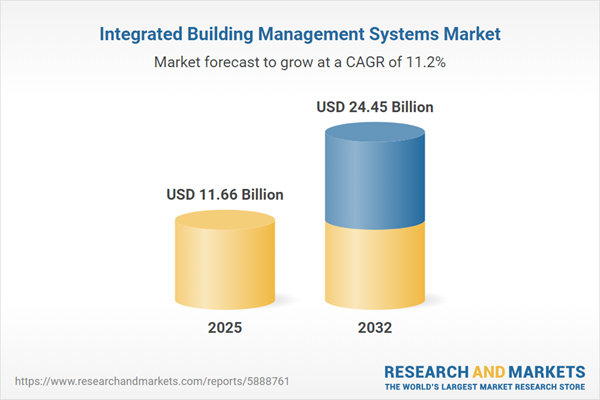
Scope & Segmentation of the Integrated Building Management Systems Market
- Component Types: IBMS solutions feature advanced controllers, sensors, gateways, actuators, and centralized software aimed at improving energy efficiency, cybersecurity, and facility management. Professional services in consulting, system integration, deployment, and support enhance performance and optimize returns.
- Applications: Solutions cover energy management, lighting optimization, HVAC control, access management, fire detection, intrusion prevention, and video monitoring, supporting regulatory compliance, business continuity, and building occupant safety.
- End Users: IBMS deployments occur in office buildings, healthcare institutions, hospitality venues, retail outlets, manufacturing sites, data centers, utilities, public sector facilities, laboratories, and residential buildings, adapted to operational needs and sector risk profiles.
- Communication Types: Both wired protocols (BACnet IP, MS/TP, LonWorks, Modbus) and wireless options (EnOcean, Wi-Fi, WirelessHART, Zigbee) are used for seamless integration, supporting secure and streamlined operations.
- Deployment Modes: Cloud-based and on-premises configurations enable scalability and compliance across diverse IT environments, aligning with organizational security and infrastructure requirements.
- Regions: Implementation is global, with significant adoption in the Americas, Europe, Middle East, Africa, and Asia-Pacific, driven by infrastructure advancement, regulatory environment, and policy standards.
- Companies Covered: Key players include Schneider Electric SE, Johnson Controls International plc, Siemens AG, Honeywell International Inc., ABB Ltd, Carrier Global Corporation, Trane Technologies plc, Delta Electronics, Acuity Brands, and BuildingIQ, all focused on refining solutions to meet evolving needs.
Integrated Building Management Systems: Key Takeaways for Decision-Makers
- IBMS facilitates the integration of both older and newer systems for cohesive management of widespread facilities.
- Technologies such as edge computing, AI, and digital twins enhance predictive maintenance, reduce risk, and optimize performance through analytics-driven strategies.
- Cloud-based and on-premises options provide flexibility, helping organizations adjust to compliance demands and IT infrastructure requirements.
- Adhering to standards-based protocols speeds up system implementation and minimizes reliance on proprietary platforms.
- Cybersecurity measures and staff training boost the protection and resilience of interconnected building environments.
- Objectives vary by sector, with commercial properties focusing on occupant well-being, manufacturers on operational continuity, and government entities on security and sustainability.
Why This Report Matters
- Offers frameworks for executives to scale IBMS strategies, addressing compliance and operational demands amid evolving regulatory climates.
- Provides actionable market segmentation and insights for informed investments, risk management, and sustainability initiatives in high-value properties.
- Supports evidence-based technology and supplier decisions with validated data and methodologies aligned with enterprise objectives.
Key Attributes:
| Report Attribute | Details |
| No. of Pages | 199 |
| Forecast Period | 2025 - 2032 |
| Estimated Market Value (USD) in 2025 | $11.66 Billion |
| Forecasted Market Value (USD) by 2032 | $24.45 Billion |
| Compound Annual Growth Rate | 11.1% |
| Regions Covered | Global |
Companies Featured
The companies profiled in this Integrated Building Management Systems market report include:
- Schneider Electric SE
- Johnson Controls International plc
- Siemens AG
- Honeywell International Inc.
- ABB Ltd
- Carrier Global Corporation
- Trane Technologies plc
- Delta Electronics, Inc.
- Acuity Brands, Inc.
- BuildingIQ, Inc.
For more information about this report visit https://www.researchandmarkets.com/r/lrr2i6
About ResearchAndMarkets.com
ResearchAndMarkets.com is the world's leading source for international market research reports and market data. We provide you with the latest data on international and regional markets, key industries, the top companies, new products and the latest trends.
Attachment
