Dublin, Nov. 12, 2025 (GLOBE NEWSWIRE) -- The "United States Cocoa Processing Market Report by Product Type, Application, States and Company Analysis, 2025-2033" report has been added to ResearchAndMarkets.com's offering.
The United States Cocoa Processing Market is expected to reach US$ 5.55 billion by 2033 from US$ 4.28 billion in 2024, with a CAGR of 2.92% from 2025 to 2033
The market for cocoa processing in the US is anticipated to rise gradually due to rising demand for chocolate, new developments in cocoa-based products, and the growing significance of sustainable sourcing and processing methods. The United States cocoa processing market spans key states such as California, Texas, New York, and Florida, each contributing uniquely through manufacturing hubs, consumer demand, and regional distribution networks.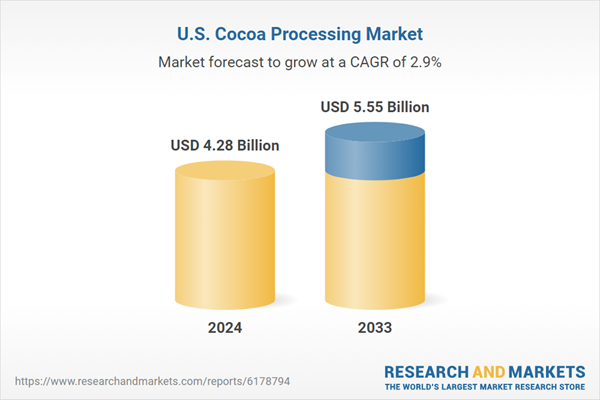
The market is being reshaped by changing consumer preferences. Cocoa processors are being forced to modify their supply chains due to the rising demand for premium chocolates, organic cocoa, and products obtained responsibly. Sustainability certifications and traceability systems are becoming more and more popular as organizations and consumers alike emphasize ethical sourcing methods. Additionally, companies are able to broaden their product offers by offering specialty cocoa powders and health-focused cocoa derivatives thanks to advancements in processing techniques.
Notwithstanding positive developments, the sector still has to deal with issues including unstable cocoa bean pricing and supply chain interruptions. Operations are also impacted by regulatory examination of environmental effect and sustainability policies. Nonetheless, the U.S. cocoa processing sector is positioned for long-term growth and competitiveness because to continuous R&D expenditures and collaborations between processors, chocolate producers, and international suppliers.
Key Factors Driving the United States Cocoa Processing Market Growth
Rising Chocolate and Confectionery Demand
Chocolate consumption remains the largest driver of cocoa processing in the United States. Seasonal spikes during holidays, coupled with consistent everyday demand, create a stable requirement for cocoa butter, powder, and liquor. Confectionery manufacturers rely on processed cocoa as the foundation of their products, ensuring sustained demand across multiple categories.
The popularity of premium chocolates and artisanal brands further strengthens growth, as these products typically use higher-quality cocoa ingredients. This consistent and diversified demand base makes chocolate consumption one of the strongest growth drivers for the cocoa processing sector.
Increasing Focus on Sustainable Sourcing
Sustainability has become a defining factor in the U.S. cocoa processing market. Consumers and manufacturers alike are prioritizing ethically sourced and traceable cocoa products, driving demand for certified and responsibly produced cocoa intermediates. Processors are actively investing in programs that ensure environmental responsibility, fair trade, and support for cocoa farmers.
These initiatives not only align with global corporate social responsibility standards but also strengthen brand image and consumer trust. By embedding sustainability into sourcing and processing practices, cocoa processors can secure long-term growth while meeting rising consumer expectations for transparency and ethical standards.
Product Innovation and Diversification
Innovation in processing methods and product development is reshaping the cocoa processing landscape. Beyond traditional chocolate, there is rising demand for cocoa derivatives in bakery, beverages, snacks, and health-oriented products. Companies are introducing specialized cocoa powders, reduced-fat variants, and functional cocoa-based ingredients to meet evolving dietary preferences.
Innovation allows processors to move beyond commodity markets into value-added segments, enhancing profitability. By leveraging R&D and consumer insights, cocoa processors can diversify applications, reduce dependence on cyclical chocolate demand, and create a stronger competitive edge in the U.S. market.
Challenges in the United States Cocoa Processing Market
Volatility in Cocoa Bean Prices
The U.S. cocoa processing industry is heavily dependent on imported raw cocoa beans, making it highly vulnerable to global price fluctuations. Supply disruptions caused by weather conditions, geopolitical tensions, or production challenges in key cocoa-producing regions directly impact processing costs.
Volatility in bean prices creates uncertainties for both large and mid-sized processors, limiting profitability and operational planning. To mitigate these challenges, companies often rely on long-term contracts, hedging, and diversification of sourcing regions. Nonetheless, price instability remains a persistent hurdle for sustained growth.
Supply Chain and Sustainability Challenges
Supply chain complexity poses another significant challenge for the U.S. cocoa processing market. Ensuring traceability from farms to factories requires heavy investment in monitoring systems, certifications, and farmer support programs.
Additionally, growing scrutiny over environmental impacts and labor practices in cocoa-producing countries adds compliance costs for processors. While sustainability efforts are gaining momentum, balancing cost efficiency with ethical practices remains a delicate issue. Failure to address these concerns can negatively impact brand reputation and consumer trust, making this a critical barrier for the industry.
Key Attributes:
| Report Attribute | Details |
| No. of Pages | 200 |
| Forecast Period | 2024 - 2033 |
| Estimated Market Value (USD) in 2024 | $4.28 Billion |
| Forecasted Market Value (USD) by 2033 | $5.55 Billion |
| Compound Annual Growth Rate | 2.9% |
| Regions Covered | United States |
Company Analysis: Overview, Key Persons, Recent Developments, SWOT Analysis, Revenue Analysis
- Guan Chong Bhd
- Ecom Agroindustrial Corp. Limited
- Nestle SA
- Barry Callebaut Group
- Blommer Chocolate Company
- Mondelez International, Inc.
- Cargill Incorporated
- Olam International
- Touton S.A.
Market Segmentations
Type
- Cocoa Powder
- Cocoa Butter
- Cocoa Liquor
- Specialty Fats
- Others
Application
- Confectionery
- Functional Foods & Beverages
- Pharmaceuticals
- Cosmetics
States
- California
- Texas
- New York
- Florida
- Illinois
- Pennsylvania
- Ohio
- Georgia
- New Jersey
- Washington
- North Carolina
- Massachusetts
- Virginia
- Michigan
- Maryland
- Colorado
- Tennessee
- Indiana
- Arizona
- Minnesota
- Wisconsin
- Missouri
- Connecticut
- South Carolina
- Oregon
- Louisiana
- Alabama
- Kentucky
- Rest of United States
For more information about this report visit https://www.researchandmarkets.com/r/pc1a6z
About ResearchAndMarkets.com
ResearchAndMarkets.com is the world's leading source for international market research reports and market data. We provide you with the latest data on international and regional markets, key industries, the top companies, new products and the latest trends.
Attachment
